
How to Read Supplement Labels as a Vegan — A Practical UK Guide
-
By Chris Jones
Written by Chris Jones, Social Media Manager at Nutrivity with 7+ years in the supplement industry.
How to Read Supplement Labels as a Vegan — A Practical UK Guide
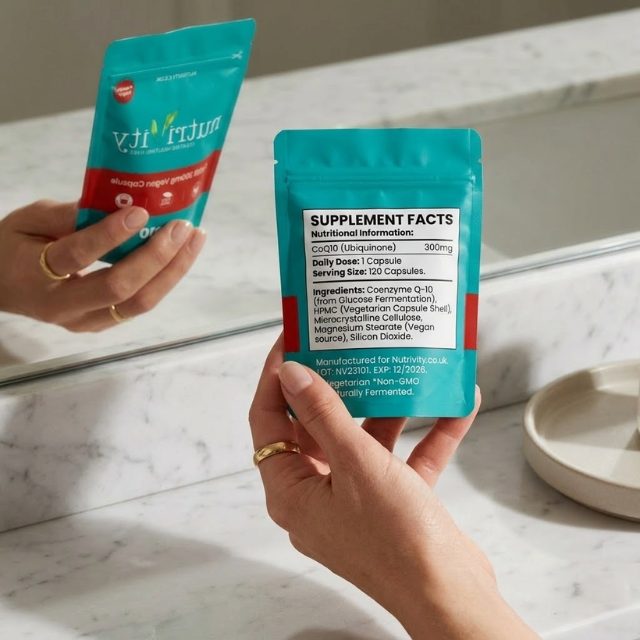
A supplement label is not designed to help you assess vegan compliance. It is designed to communicate health benefits, reassure on safety, and meet minimum legal requirements. The information a vegan consumer needs — capsule material, vitamin D3 source, flow agent origin, extraction method — is either buried in the ingredient list, absent from the label entirely, or requires knowledge that most consumers do not have to interpret correctly.
This guide walks through exactly what to look for on a UK supplement label, where to find it, and what to do when the label does not give you enough information to make a confident decision. For a broader overview of the hidden non-vegan ingredients in UK supplements, see our guide to are supplements vegan. For Nutrivity’s complete range of vegan-suitable supplements, visit our vegan supplements guide.
Why UK Supplement Labels Are Not Enough on Their Own
UK food and supplement labelling law requires all ingredients to be listed in descending order of weight. This is a useful foundation but it has three significant gaps for vegan consumers.
First, the law does not require animal-derived ingredients to state their source species. Gelatine must be listed as “gelatine” but the label is not required to state whether it comes from pigs, cattle, or fish. This is the most significant labelling gap for vegan compliance — the ingredient that matters most tells you the least.
Second, the law does not require the origin of vitamins to be disclosed. Vitamin D3 from sheep’s wool lanolin and vitamin D3 from lichen appear identically on a label — both listed as “vitamin D3” or “cholecalciferol” with no source distinction required.
Third, processing aids used during manufacturing that are not present at functional levels in the finished product are not required to appear on the label. Alcohol used during herbal extraction, for example, may not appear anywhere on the label even if you would consider its use relevant to your purchasing decision.
These gaps mean that label reading is necessary but not sufficient. For some product types, particularly herbal supplements and vitamin D3 products, you will need to go beyond the label.
The Six-Point Vegan Label Checklist
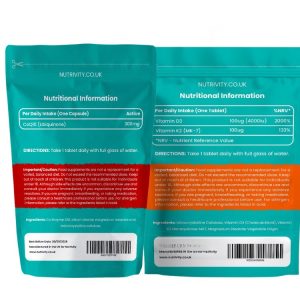 1. Capsule Shell
This is the first thing to check on any capsule-format supplement. Look in the ingredients list for the capsule material. The halal cluster article on this topic goes into full detail, but the vegan summary is:
Vegan-suitable: HPMC, hypromellose, vegetable capsule, pullulan. All plant-derived, no animal ingredients.
Not vegan: Gelatine. Any source — bovine, porcine, or fish — is not vegan. If you see gelatine on the label, the product is not vegan-suitable regardless of what else it contains.
Soft gel format: Assume gelatine unless the brand explicitly states a plant-based alternative has been used. Standard soft gel production requires gelatine. For a full explanation of capsule types and vegan status, see our guide to are capsules vegan.
2. Vitamin D3 Source
Vegan-suitable: Lichen-derived D3. Will be stated explicitly — brands using lichen-derived D3 treat it as a selling point and communicate it clearly.
Not vegan: Lanolin-derived D3. Will appear on labels simply as “vitamin D3” or “cholecalciferol” with no source stated. This is the default in the UK market.
Vegan-suitable alternative: Vitamin D2 (ergocalciferol) — plant-derived but less effective than D3 at raising serum vitamin D levels.
If a label says “vitamin D3” or “cholecalciferol” with no source stated, assume it is lanolin-derived and contact the brand to confirm before purchasing. For a full breakdown of the D3 source issue, see our guide to is vitamin D3 vegan.
3. Colourings
Not vegan: E120 (carmine, cochineal, carminic acid) — derived from crushed insects. Check the label for any of these four names on any coloured capsule or tablet.
Not vegan: E904 (shellac) — a resin secreted by the lac insect, used as a glazing agent on some tablets.
Vegan-suitable colourings: Most synthetic colourings (E102, E110, E122, E124, E132, E133) and plant-derived colourings (beetroot red, turmeric, spirulina) are vegan-suitable. If in doubt about a specific E-number, look it up — the Vegan Society maintains a useful reference list.
4. Flow Agents and Anti-Caking Agents
Requires checking: Magnesium stearate — can be animal-derived (from pork or beef tallow) or plant-derived (from palm or vegetable oil). The label will say “magnesium stearate” in both cases. Contact the brand and ask whether their magnesium stearate is vegetable-derived. Brands committed to vegan manufacture will either state this on the label or confirm it immediately when asked. Nutrivity uses vegetable-derived magnesium stearate across all products.
Vegan-suitable: Silicon dioxide (silica), rice flour, microcrystalline cellulose — all plant or mineral origin with no animal concern.
Requires checking: Stearic acid — same issue as magnesium stearate. Animal or plant-derived, no distinction on the label.
5. Omega-3 and Oil Sources
Not vegan: Fish oil, cod liver oil, krill oil — all animal-derived, almost always in gelatine soft gel capsules.
Vegan-suitable for EPA and DHA: Algae-derived omega-3 — the only vegan source of direct EPA and DHA. Will be stated explicitly on the label or product page. For a full breakdown of vegan omega-3 options, see our guide to vegan omega-3 supplements UK.
Vegan-suitable for ALA: Flaxseed oil, hemp seed oil, chia seed oil — all plant-derived. Provide ALA only, not direct EPA and DHA.
6. Herbal Extract Type
For herbal supplement products, the extraction method is the vegan concern most commonly absent from the label. Alcohol (ethanol) is a widely used extraction solvent. Whether alcohol-based extraction affects vegan compliance is a matter of individual consumer preference — the alcohol itself is plant-derived, and the quantity remaining in the finished product is typically negligible. However, some vegan consumers prefer alcohol-free products.
Brands that use water-based or CO2 extraction will typically state “alcohol-free extraction,” “aqueous extract,” or “supercritical CO2 extract” because it is a positive differentiator. If none of these appear and the product contains herbal extracts, contact the brand and ask. Nutrivity uses alcohol-free extraction across all herbal formulations — confirmed on every relevant product page.
Quick Reference — Vegan Label Checklist
Capsule shell: HPMC / hypromellose / vegetable capsule / pullulan = vegan-suitable. Gelatine (any source) = not vegan.
Vitamin D3: Lichen-derived = vegan. Lanolin-derived = not vegan. Source unstated = contact the brand.
Colourings: E120 / carmine / cochineal / carminic acid = not vegan. E904 / shellac = not vegan.
Flow agents: Silicon dioxide / rice flour / microcrystalline cellulose = vegan. Magnesium stearate / stearic acid = check source.
Omega-3: Fish oil / cod liver oil / krill oil = not vegan. Algae-derived = vegan for EPA and DHA. Flaxseed / hemp / chia = vegan for ALA.
Soft gels: Assume gelatine unless explicitly stated otherwise.
When the Label Is Not Enough — What to Do Next
For any ingredient where the label does not give you sufficient information — unstated gelatine source, no D3 origin disclosed, no extraction method on a herbal product, unspecified magnesium stearate source — the next step is direct contact with the brand.
The specific questions to ask: Is your capsule material HPMC or gelatine? If gelatine, what is the animal source? Is your vitamin D3 lanolin-derived or lichen-derived? Is your magnesium stearate vegetable-derived? What extraction method is used for your herbal ingredients?
A brand committed to vegan manufacture will answer all five questions clearly and immediately. A brand that cannot answer these questions — or that is evasive or vague in response — is telling you something important about their transparency standards and their relationship with vegan consumers.
Summary — Read the Label, Then Go Further
UK supplement labels give you the ingredient list — but the ingredient list alone is often not enough for confident vegan assessment. Gelatine source, vitamin D3 origin, flow agent derivation, and herbal extraction method all require information that current labelling law does not mandate to be disclosed. The label is the starting point, not the end point.
The practical approach is to use the six-point checklist on every product: capsule shell first, then vitamin D3 source, colourings, flow agents, omega-3 source, and herbal extraction method. For anything the label does not answer, contact the brand. A brand that cannot answer these questions clearly is telling you something important about how seriously it takes vegan consumers.
Browse Nutrivity’s complete vegan supplements range, with full ingredient transparency on every product page and UK GMP-certified manufacturing throughout.
Frequently Asked Questions
Do UK supplement labels have to list all ingredients?
Yes — UK food labelling law requires all ingredients to be listed in descending order of weight. However, the law does not require the source species of animal-derived ingredients to be stated, the origin of vitamins such as D3 to be disclosed, or processing aids at non-functional levels to appear on the label. The ingredient list is the starting point for vegan assessment, not the complete picture.
How do I know if a supplement capsule is vegan?
Check the ingredient list for the capsule shell material. HPMC, hypromellose, vegetable capsule, or pullulan confirms a vegan-suitable shell. Gelatine — regardless of source — is not vegan. If the product is in soft gel format, assume gelatine unless the brand explicitly states a plant-based alternative. If no capsule material is listed, contact the brand directly.
What does "suitable for vegetarians" mean on a supplement?
It means the product contains no meat or fish. It does not mean it contains no animal-derived ingredients. Bovine gelatine capsules, lanolin-derived D3, and shellac coatings are all technically vegetarian. A vegetarian label does not confirm vegan suitability — always check the ingredient list independently.
Is a certified vegan logo reliable for supplements?
Yes — products carrying the Vegan Society Trademark or equivalent certification have had their ingredients and manufacturing processes verified by a third party. This is the most reliable signal for full vegan compliance on a supplement label. However, many genuinely vegan-suitable supplements are not certified — certification costs money and some brands choose ingredient transparency instead. The absence of a certified vegan logo does not automatically mean a product is not vegan-suitable.
Are natural flavourings vegan?
Not necessarily. “Natural flavourings” can be derived from plant or animal sources — the term covers both under UK labelling law. If a product contains natural flavourings and you want to confirm their vegan status, contact the brand directly. This is a lower priority than capsule material and D3 source in most cases, but worth checking on products where all other ingredients have been confirmed vegan.
Are Nutrivity supplements fully labelled for vegan compliance?
Nutrivity publishes full ingredient information on every product page, including capsule material, extraction method for herbal products, and D3 source where applicable. Hard capsule products use HPMC vegetable capsules, alcohol-free extraction, and vegetable-derived magnesium stearate. Soft gel products use halal-permissible gelatine and are not vegan-suitable. All of this is stated without the need to contact the brand.