
Is Vitamin D3 Vegan? Lanolin vs Lichen Explained
-
By Chris Jones
Written by Chris Jones, Social Media Manager at Nutrivity with 7+ years in the supplement industry.
Is Vitamin D3 Vegan? Lanolin vs Lichen Explained
Vitamin D3 is one of the most widely taken supplements in the UK — and one of the most commonly misunderstood by vegan consumers. The problem is not with vitamin D3 itself but with where it comes from. Most vitamin D3 on the UK market is derived from lanolin, a waxy grease extracted from sheep’s wool. Lanolin-derived D3 is not vegan. Yet it appears on supplement labels simply as “vitamin D3” or “cholecalciferol” with no indication of its animal origin.
This guide explains exactly what the two sources of vitamin D3 are, why one is vegan and one is not, how to tell them apart on a label, and which Nutrivity products use the vegan-suitable alternative. For a full overview of vegan-suitable supplements from Nutrivity, visit our vegan supplements guide.
Why Vitamin D3 Is Not Automatically Vegan
Vitamin D3 (cholecalciferol) is the form of vitamin D that the body produces naturally when skin is exposed to UVB sunlight. It is the preferred form for supplementation because it raises serum vitamin D levels more effectively than vitamin D2 (ergocalciferol), which is the plant-derived alternative.
The challenge for vegan consumers is that the most widely used manufacturing route for vitamin D3 involves an animal source. In nature, animals — including humans — produce D3 when UV light interacts with 7-dehydrocholesterol in the skin. In supplement manufacturing, this same precursor compound is extracted from lanolin — sheep’s wool grease — and converted to D3 through UV irradiation. The process mimics what happens naturally in skin, but the starting material is animal-derived.
This makes lanolin-derived D3 unacceptable for vegan consumers. The sheep are not slaughtered for lanolin — it is a by product of wool processing — but it involves direct exploitation of an animal and is not considered vegan by any mainstream vegan standard.
Lanolin-Derived D3 — The Industry Default
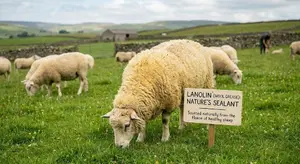 Lanolin-derived vitamin D3 dominates the UK supplement market for one straightforward reason: it is cheap to produce at scale. Lanolin is a by product of the wool industry and is available in large quantities at low cost. The conversion process from lanolin to cholecalciferol is well-established and cost-efficient.
The result is that the vast majority of vitamin D3 supplements sold in UK supermarkets, pharmacies, and online — including many products carrying a vegetarian label — use lanolin-derived D3. This includes most leading brands. The label will say “vitamin D3” or “cholecalciferol” in every case. There is no legal requirement to state the source, and most brands do not volunteer the information.
For vegan consumers, this means the default assumption when buying vitamin D3 must be that it is lanolin-derived unless the brand explicitly states otherwise. Silence on D3 source is not confirmation of vegan suitability — it is the opposite.
Lichen-Derived D3 — The Vegan Alternative
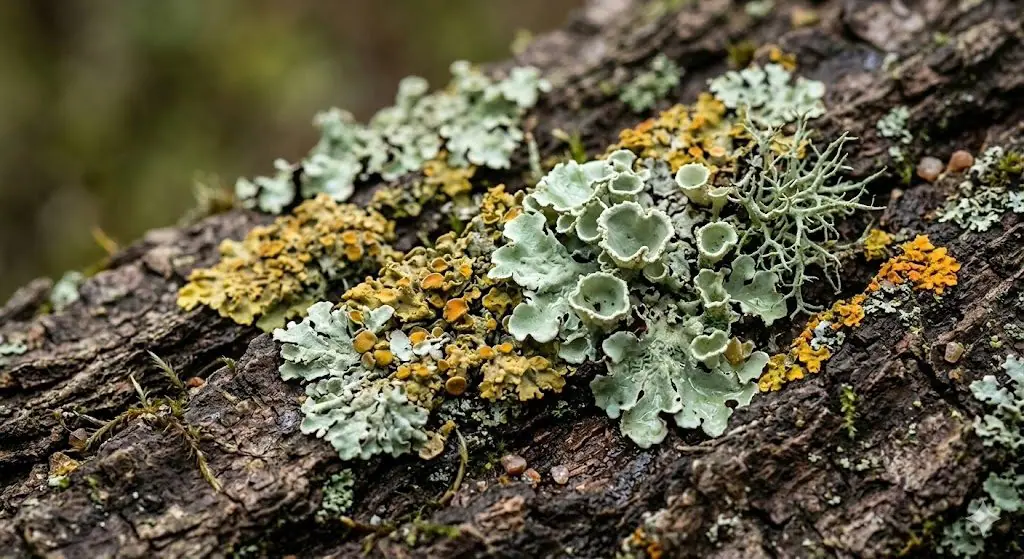
Lichen is a composite organism — part fungus, part algae — that grows on rocks, bark, and soil surfaces. Certain species of lichen naturally produce vitamin D3 when exposed to UV light, making them the only known non-animal source of D3 (as opposed to D2, which is produced by fungi and yeast).
Lichen-derived D3 is extracted from these organisms, purified, and used as a supplement ingredient that is chemically identical to lanolin-derived D3 — it is the same molecule, cholecalciferol, produced through a different route. The bioavailability and effectiveness of lichen-derived D3 is equivalent to lanolin-derived D3. There is no efficacy compromise in choosing the vegan source.
Lichen-derived D3 is more expensive to produce than lanolin-derived D3, which is why it remains less common in the UK market. However, it is widely available from specialist supplement manufacturers, and brands that use it almost always state this prominently because it is a genuine differentiator for the vegan and health-conscious consumer.
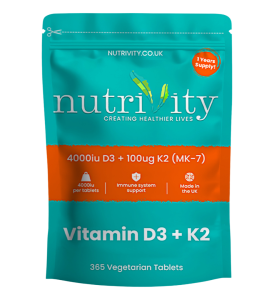
Nutrivity’s Vitamin D3 4000 IU + K2 MK7 uses lichen-derived D3 — fully plant-based, no lanolin, vegan-suitable and halal-suitable. At 4000 IU per tablet with 100mcg MK7 vitamin K2, it is one of the highest-strength vegan D3+K2 supplements available in the UK.
What About Vitamin D2?
Vitamin D2 (ergocalciferol) is produced by fungi and yeast when exposed to UV light and is entirely plant-based — it has always been the default vegan form of vitamin D. However, research consistently shows that D3 raises and maintains serum vitamin D levels more effectively than D2. For vegan consumers who want the superior form of vitamin D without an animal source, lichen-derived D3 is the answer — it delivers D3 efficacy with full vegan suitability.
D2 remains a valid vegan option and is used in many vegan multivitamins and dedicated vitamin D supplements. If you are choosing between a lanolin-derived D3 supplement and a D2 supplement, D2 is the vegan choice. But if lichen-derived D3 is available — and at Nutrivity it is — that is the optimal combination of efficacy and vegan compliance.
How to Check the D3 Source on a Supplement Label
UK labelling law does not require the source of vitamin D3 to be stated on the label. This means you cannot determine D3 origin from the ingredient list alone in most cases. Here is the practical approach to checking:
Look for explicit statements. Brands using lichen-derived D3 typically state “lichen-derived,” “plant-based D3,” or “vegan D3” on the label or product page — it is a selling point they have every incentive to communicate. If you see this stated, the D3 is vegan-suitable.
Check the product page. Most brands that use lichen-derived D3 will state this clearly on their website even if the label space is limited. Nutrivity confirms D3 source on every relevant product page.
Check for a certified vegan logo. Products carrying the Vegan Society Trademark or equivalent certification will have had their D3 source verified as part of the certification process. A certified vegan D3 supplement uses lichen-derived D3.
If in doubt, contact the brand. Ask directly: “Is your vitamin D3 lanolin-derived or lichen-derived?” Any brand using lichen-derived D3 will answer this immediately and confidently. A brand that cannot answer or is evasive almost certainly uses the lanolin-derived default.
 Summary — Choosing Vegan Vitamin D3 in the UK
The vitamin D3 source question is one of the most important label-reading issues for vegan supplement consumers in the UK — and one of the least visible, because labelling law does not require disclosure. The industry default is lanolin-derived D3 from sheep’s wool, which appears on labels simply as “vitamin D3” or “cholecalciferol” without any indication of its animal origin.
The solution is straightforward: choose products that explicitly state lichen-derived D3, look for certified vegan logos that verify the D3 source, or contact the brand directly. Lichen-derived D3 is chemically identical to lanolin-derived D3 and equally effective — the vegan option involves no compromise on performance, only on price. For vegan consumers in the UK, it is the only fully compliant choice for vitamin D3 supplementation.
Browse Nutrivity’s complete vegan supplements range, with full ingredient transparency on every product page and UK GMP-certified manufacturing throughout.
Frequently Asked Questions
Is vitamin D3 vegan?
It depends on the source. Lichen-derived D3 is fully plant-based and vegan. Lanolin-derived D3 comes from sheep’s wool grease and is not vegan. The majority of vitamin D3 supplements on the UK market are lanolin-derived. Always confirm the source with the brand before purchasing — the label alone is not sufficient.
What is the difference between D2 and D3?
Vitamin D2 (ergocalciferol) is plant-derived and vegan-suitable. Vitamin D3 (cholecalciferol) is more effective at raising serum vitamin D levels but is most commonly derived from lanolin. Lichen-derived D3 combines D3 efficacy with full vegan suitability and is the preferred option for vegan consumers who want the most effective form of vitamin D.
Is lichen-derived D3 as effective as lanolin-derived D3?
Yes. Both forms are chemically identical — the same molecule, cholecalciferol, produced through different routes. Bioavailability and effectiveness are equivalent. Choosing lichen-derived D3 involves no efficacy compromise.
How do I know if my vitamin D supplement is vegan?
Check the product page or label for an explicit statement that the D3 is lichen-derived or plant-based. Look for a certified vegan logo, which verifies the D3 source as part of the certification process. If neither is present and the product contains D3, contact the brand directly and ask whether it is lanolin or lichen-derived.
Does Nutrivity's vitamin D3 contain lanolin?
No. Nutrivity’s Vitamin D3 4000 IU + K2 MK7 uses lichen-derived D3 — fully plant-based with no lanolin. It is vegan-suitable and halal-suitable, in a compressed tablet format with no gelatine capsule.
Can vegans get enough vitamin D from diet alone?
It is extremely difficult to obtain adequate vitamin D from diet alone, regardless of dietary pattern — and particularly so on a vegan diet, which excludes the few food sources of D3 (oily fish and egg yolks). The NHS recommends vitamin D supplementation for everyone in the UK during autumn and winter, and year-round for those with limited sun exposure. For vegan consumers, a lichen-derived D3 supplement is the most practical and effective way to maintain adequate vitamin D levels.